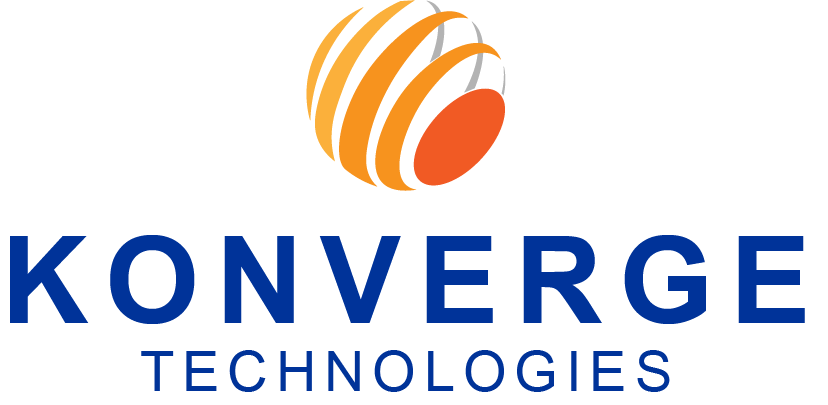

Enterprise Data Center vs Cloud – What Large Businesses Prefer
Posted By: Konverge Marketing
May 8, 2026
As businesses expand and adopt technology more widely, the choice between the traditional infrastructure approach and the newer cloud computing strategy has become very relevant. The enterprise data center is a focal point in this discussion because it is the older strategy adopted by large corporations that need dependability and safety. However, cloud computing has made its way to be considered too because of its benefits of agility and scalability. Which one do large firms prefer?
The answer is not as straightforward as choosing one over the other. It does not depend on favoring one or the other but rather on knowing why and how each concept fits business needs.
Understanding the Traditional Data Center Model
A business data center is a physical facility that corporations use to house their key information technology systems, such as servers, storage systems, network components, and security systems. They may either be owned or leased, and they may be operated within the company itself or through third-party service providers.
Why Enterprises Still Rely on It
Big corporations tend to value reliability and autonomy. A typical data center provides them with:
- Full control over infrastructure
Companies have the freedom to configure IT environments as per their requirements.
- Enhanced data security
Confidential information stays inside the company premises and faces fewer chances of any breaches.
- Compliance assurance
The financial, medical, and governmental sectors need stringent regulations, which can be effectively managed by using dedicated facilities.
- Predictable performance
Dedicated resources lead to consistent performance, free from any reliance on shared spaces.
However, there are certain challenges with sustaining such a model, especially in terms of cost and effort.
The Rise of Cloud Computing in Enterprises
Cloud computing has changed how companies use information technology resources. Instead of purchasing infrastructure, computing capabilities, storage capacity, and applications, all these facilities can be used through the Internet.
What Makes Cloud Attractive?
The uptake of cloud computing services has increased significantly, thanks to various advantages:
- Scalability on demand
Resources can be scaled to suit workload needs.
- Cost efficiency
Reduces capital expenses related to purchasing hardware.
- Faster deployment
Quick deployment of applications and services.
- Remote accessibility
Accessing systems remotely is now possible.
However, cloud computing may still pose security issues such as data sovereignty, latency, and dependence on service providers when handling mission-critical operations.
A Closer Look at Enterprise Preferences
Strangely enough, large companies do not abandon one approach in favor of another but rather combine both models into one hybrid.
It usually looks like the enterprise data center continues to be vital for handling sensitive and critical workloads, while the cloud platforms are being utilized for flexibility and innovation.
Key Decision Factors for Enterprises
When making decisions about whether to opt for enterprise data centers or cloud infrastructure, enterprises consider such criteria as:
- Workload type
Typically, critical applications are run on premises while more flexible workloads are moved to the cloud.
- Cost structure
Usually, the difference lies between operating costs and capex.
- Security requirements
The strategy adopted by enterprises is to ensure security and protect the data.
- Performance needs
Sometimes, latency makes an on-premise solution more attractive.
- Business continuity
Often involves using both approaches.
Hybrid Infrastructure: The New Standard
It becomes clear that hybrid IT infrastructures start gaining traction among large corporations. With a hybrid IT approach, companies have an opportunity to unite their legacy on-premises infrastructure and cloud infrastructure.
Benefits of a Hybrid Approach
- Balanced control and flexibility
Companies maintain control over important systems, but they benefit from scalable clouds.
- Optimized costs
Distribute your resources according to workload requirements.
- Improved resilience
Take advantage of reliable on-premise and cloud disaster recovery services.
- Effective data management
Store sensitive data on-premise and keep other data in the cloud.
With this model, businesses can upgrade their operations without changing all of the existing infrastructure.
Challenges Enterprises Must Navigate
Although each architecture is different and has certain benefits, it poses certain problems for organizations.
For Data Centers:
- High maintenance and operational costs
- Need for skilled IT personnel
- Limited scalability compared to the cloud
For Cloud:
- Data security concerns
- Potential compliance issues
- Dependency on service providers
- Hidden or variable costs
Enterprises need to consider these problems alongside other strategic considerations.
Strategic Considerations for Large Businesses
When deciding on their infrastructure, enterprises should take a strategic path:
- Assess current and future needs
Understand how their requirements could develop over time.
- Prioritize critical workloads
Determine the tasks requiring the highest possible performance and security.
- Adopt automation and virtualization.
Increase efficiency in both environments.
- Focus on integration
Guarantee smooth connection of their premises and cloud-based resources.
- Invest in cybersecurity
Protect all data stored on-premises or in the cloud by applying adequate security measures.
They allow companies to create an adaptable and future-proof IT environment.
Building the Right Infrastructure for Tomorrow
With the ever-increasing pace of transformation, the picture of IT infrastructures is expected to keep developing. More large companies are understanding that the combination of flexibility, security, and scalability becomes a must-have.
On one hand, an enterprise data center is essential, as it provides businesses with the ability to manage and govern their data. On the other hand, the cloud offers flexibility, allowing for innovation.
The Way Forward
Instead of opting for one or another solution, enterprises are now paying attention to integration and optimization. They gain benefits from the combination of both:
- Greater operational efficiency
- Enhanced user experience
- Stronger data governance
- Faster innovation cycles
A Future-Ready Perspective on Enterprise Infrastructure
In today’s highly competitive environment, decisions concerning infrastructure go beyond just technology. Organizations that are able to strike a balance between control and flexibility have more chances to cope with the evolving market dynamics.
However, reaching this balance can be made easier by engaging seasoned solution providers. The experience and skills of Konverge in providing scalable IT infrastructure solutions tailored to the needs of contemporary enterprises can be of immense value.
Cloud computing services, data center solutions, IT infrastructure management services, network security solutions, hybrid cloud architecture, and much more can be considered for implementation in a company’s operations.
Recent Posts
FortiGate Firewall: Key Features to Consider for Enterprise Network Security
September 10, 2026
No Comments
Read More »
How Cisco Collaboration Solutions Support Better Communication Across Modern Workplaces
September 1, 2026
No Comments
Read More »