
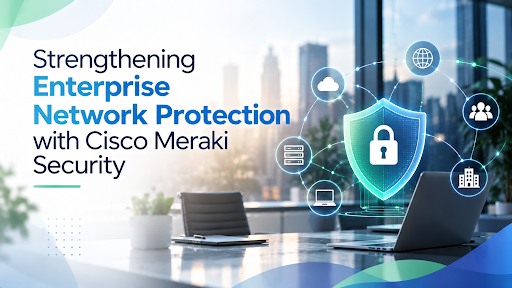
Strengthening Enterprise Network Protection with Cisco Meraki Security
Posted By: Konverge Marketing
October 29, 2026
Enterprise networks connect employees, applications, devices, and business locations, making them essential to daily operations. However, the growing use of cloud applications, remote work, and connected devices also creates new security challenges. Businesses need solutions that protect sensitive information without making network management complicated. Cisco Meraki Security helps organisations strengthen network protection through cloud-managed security capabilities, centralised visibility, and simplified administration across distributed environments.
By bringing network management and security controls together, businesses can improve oversight, respond to potential threats, and support their changing technology needs. Understanding these capabilities can help IT teams develop a more reliable and secure network infrastructure.
Why Enterprise Networks Need Stronger Protection
Modern businesses rarely operate from a single office or rely on one network. Employees may connect from branch offices, homes, and shared workspaces, while applications and data reside across on-premises infrastructure and cloud platforms.
This creates several potential risks:
- Unauthorised access: Weak access controls can allow individuals to reach systems or information they should not access.
- Malware and ransomware: Malicious software can disrupt operations, compromise data, and affect business continuity.
- Limited network visibility: Managing multiple locations separately can make it difficult to identify unusual activity.
- Unsecured devices: Connected devices and poorly configured endpoints can introduce vulnerabilities.
- Inconsistent security policies: Different configurations across offices can create gaps in protection.
A strong enterprise security strategy addresses these challenges through appropriate access controls, network monitoring, traffic management, and regular security reviews.
How Cloud-Managed Security Simplifies Network Management
Traditional network management may involve separate tools, manual configuration, and visits to individual locations for troubleshooting. These tasks can become difficult to manage as an organisation expands.
Cloud-managed networking provides a central interface through which authorised IT teams can configure supported devices, monitor network health, and manage policies across multiple sites. Cisco Meraki’s cloud dashboard helps simplify administration by bringing key management functions into one place.
This approach offers several practical benefits:
- Centralised administration: IT teams can manage supported network devices and configurations through a common dashboard rather than relying entirely on individual site management.
- Remote troubleshooting: Administrators can investigate network issues remotely, potentially reducing the need for on-site support visits.
- Consistent configurations: Centralised policy management helps organisations maintain more consistent settings across their locations.
- Scalable deployment: New offices and branches can be incorporated into the network using a repeatable deployment process.
These capabilities are particularly useful for organisations with distributed operations, including retail chains, educational institutions, healthcare providers, and businesses with multiple offices.
Essential Security Capabilities for Enterprise Networks
A reliable security strategy requires multiple layers of protection. Cloud-managed tools can simplify administration, but businesses must still select suitable controls based on their infrastructure and risk profile.
Important capabilities to consider include:
Firewall Protection
A firewall controls network traffic according to defined security rules. Cisco Meraki MX security and SD-WAN appliances provide firewall capabilities that help organisations manage traffic entering, leaving, and moving through their networks. Depending on the appliance, licence, and configuration, additional security features may be available.
Threat Detection and Prevention
Businesses need ways to identify and address suspicious network activity. Available security services can help detect or block certain threats, including malicious traffic. Appropriate configuration, current threat intelligence, and ongoing monitoring are important for making these controls effective.
Network Segmentation
Separating business-critical systems, employee devices, and guest networks can help limit unnecessary access. For example, a retail organisation may separate point-of-sale systems from guest Wi-Fi. This reduces exposure between different network areas when segmentation and access policies are configured correctly.
Secure Remote Connectivity
Remote employees need reliable access to approved business resources. Suitable VPN and secure access arrangements can help protect connections between users and enterprise networks. Access should be granted according to business requirements, with strong authentication and appropriate restrictions.
Improving Visibility Across Distributed Locations
Security teams cannot respond effectively to risks they cannot see. When network information is spread across different systems, identifying unusual activity and investigating incidents can take longer.
A centralised management platform helps administrators review device status, network performance, connected clients, and relevant security information from supported environments. This broader view can make it easier to identify configuration problems, investigate connectivity issues, and maintain consistent network operations.
For growing businesses, Cisco Meraki Security can support this centralised approach by combining cloud-based management with security features available on compatible appliances. The precise capabilities depend on the selected hardware, licensing, and deployment design.
However, a dashboard alone does not guarantee protection. Organisations should establish clear alert-handling procedures, review access permissions, maintain an accurate device inventory, and investigate suspicious activity promptly.
Supporting Hybrid Work and Cloud Adoption
Hybrid work has changed how employees access company resources. Staff may connect from different locations, use cloud-based applications, and work across several devices. Security policies must account for these differences without unnecessarily interrupting productivity.
Businesses can strengthen protection by combining secure network access, identity controls, appropriate firewall policies, and protection for remote users. Cloud-delivered security services can also extend certain protections beyond the traditional office perimeter.
Organisations adopting these technologies should evaluate how network security interacts with their wider infrastructure. Existing identity platforms, endpoint security tools, cloud services, and monitoring systems may all play a role.
A well-planned implementation should also consider business continuity, internet connectivity at branch locations, backup arrangements, and procedures for responding to security incidents.
Practical Steps for Implementing a Secure Network
Before deploying a new security solution, businesses should assess their current infrastructure and identify areas that require improvement.
A practical implementation plan can include:
- Assess existing risks: Review network devices, access permissions, traffic flows, and known vulnerabilities.
- Define security requirements: Identify the applications, users, and business systems that need protection.
- Choose suitable appliances and licences: Match available features and capacity to the organisation’s requirements.
- Configure access and segmentation: Apply appropriate rules to restrict unnecessary connections between network areas.
- Test the deployment: Confirm that security controls work as intended without disrupting essential business operations.
- Monitor and review: Examine alerts, update configurations, and reassess policies as the business changes.
Regular employee awareness training and a documented incident response plan should complement technical controls. Security is an ongoing responsibility rather than a one-time installation.
Building a Resilient Network with the Right Expertise
Strengthening enterprise protection requires a combination of suitable technology, careful implementation, and continuous management. Businesses should evaluate their network architecture, understand their security requirements, and select solutions that can adapt as their operations grow.
For organisations looking for implementation expertise and enterprise networking support, Konverge is a strong option to consider. Its Cisco Meraki solutions cover cloud-managed networking, switching, wireless connectivity, and security and SD-WAN appliances. Its Cisco security solutions also address broader security requirements across network, cloud, and hybrid environments. Exploring these offerings can help businesses assess suitable options for their infrastructure and deployment needs.
With Cisco Meraki Security, enterprises can work towards more centralised network management, improved visibility, and consistent security controls across distributed locations. Combining these capabilities with appropriate policies, regular monitoring, and ongoing security reviews helps organisations build a stronger foundation for secure and dependable business operations.
Recent Posts
Building a Scalable Data Storage Infrastructure for Long-Term Business Growth
October 22, 2026
No Comments
Read More »
Integrating Meeting Room Technology with Enterprise IT Infrastructure
October 15, 2026
No Comments
Read More »