
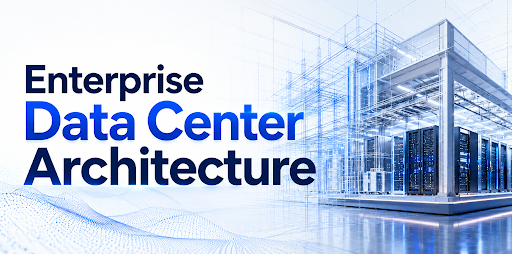
Enterprise Data Center Architecture for AI Workloads
Posted By: Konverge Marketing
May 25, 2026
AI is no longer limited to the research environment; it has become a key component in driving innovation within organizations. As a result of the increasing need for performance and efficiency in dealing with workloads that include predictive analytics and automation, it is imperative to have infrastructures in place that are capable of handling the workload requirements, especially when using efficient data center management services.
Planning for an enterprise data center for AI is not about installing additional hardware and software; it is more about having an architectural and technological plan regarding power, network, and cooling solutions that would allow the data center infrastructure to operate efficiently under heavy demands.
Understanding the Nature of AI Workloads
Certain characteristics distinguish AI workloads from other types of workloads in the enterprise. Those are:
- High computational power (especially GPUs and TPUs)
- Massive data processing capabilities
- Low-latency communication between systems
- Scalable storage for structured and unstructured data
However, unlike traditional workloads, the AI workload involves iterative training sessions that consume extensive amounts of resources over long durations. This calls for careful infrastructure planning.
Core Components of AI-Ready Data Center Architecture
1. High-Performance Compute Infrastructure
Since the AI workload demands parallel computing, companies must adopt GPU-accelerated servers that have the capacity to support parallel computing capabilities.
2. Advanced Networking Capabilities
AI workloads must incorporate ultra-high-speed connections in their design, which helps minimize the latency rate. InfiniBand connections and high-speed Ethernet solutions can go a long way to achieving this objective.
3. Scalable Storage Solutions
Data is the key ingredient when it comes to developing effective AI-based solutions. For this reason, enterprises must incorporate scalable storage solutions capable of supporting:
- Voluminous data storage needs
- High throughput rates
- Real-time data access needs
The hybrid storage architecture incorporating solid-state drives and object storage is an excellent example of a viable storage solution for most companies.
Where to Position AI Workloads Within the Data Center
In designing the AI-friendly data center, apart from the choice of hardware, the workloads’ placement is equally crucial. The AI computing cluster must be located in areas suitable for handling dense computing environments with high energy availability and efficient cooling facilities. Placing the GPU-based workloads in areas closer to efficient cooling facilities will help enhance their performance and avoid overheating problems.
Moreover, placing the AI processing capabilities closer to high-speed network connections helps achieve lower latency in data transmission between computing and storage nodes. Proper placement enhances the lifecycle of the infrastructure elements.
Power and Cooling: The Hidden Challenges
As stated earlier, AI workloads are known to produce extensive power requirements. As such, enterprises must plan for:
- Effective use of power distribution units (PDUs)
- Provision for liquid cooling or efficient air-cooling solutions
- Energy-efficient hardware solutions
- Monitoring software for real-time performance tracking
A well-designed power and cooling plan promotes sustainability while ensuring maximum efficiency.
Automation and Intelligent Management
Manual management of the AI infrastructure is impractical and inefficient. Automation is essential to ensure seamless operation.
Some of the ways contemporary data center management services can help businesses include:
- Real-time monitoring of system performance
- Failure prediction and prevention through AI-powered analytics
- Efficient allocation of resources
- Automated maintenance procedures
Not only will intelligent management increase uptime, but it will also lower operating expenses.
Security and Compliance in AI Data Centers
Since AI systems may handle confidential information, ensuring the security of such data is paramount. Enterprises should consider implementing:
- Multi-layered security systems
- Data encryption both at rest and in transit
- Access control mechanisms
- Regulatory compliance
The proper architecture helps maintain data integrity and privacy in a sophisticated AI environment.
Hybrid and Edge Integration
AI deployment is expanding into the edge computing world in order to deliver real-time analysis. Therefore, there must be a smooth interaction between centralized data centers and edge environments.
The advantages of a hybrid architecture include:
- Reduced latency for critical applications
- Improved data processing efficiency
- Flexibility to scale across environments
Organizations using hybrid architectures can leverage their systems for various AI use cases, such as IoT analysis and autonomous machines.
Designing for Scalability and Future Growth
AI technology continues to evolve, and therefore, it is necessary to plan.
Key considerations for designing scalable and adaptable infrastructure are:
- Modular data center design
- Flexible resource allocation
- Integration with cloud computing for high loads
- Future-proof infrastructure
The future-oriented strategy will guarantee that businesses will be able to adjust to any new developments in AI technology without having to completely revamp the existing infrastructure.
Operational Best Practices for AI Data Centers
To ensure efficiency and reliability, the organization must adopt these practices:
- Periodic performance reviews
- Workload-based capacity planning
- Ongoing monitoring and optimization
- AI-based management tools integration
By following these best practices, an efficient and resilient data center will be created to facilitate the running of AI systems.
Enabling Smarter Infrastructure Decisions
As the impact of AI keeps changing different industries, businesses need to reevaluate their data center structures and management approaches. Utilization of data center management services guarantees the flexibility, effectiveness, and appropriateness of the structure in line with modern technological requirements.
Introducing a proper combination of high-performance computing, scalability of storage options, network management, and automation solutions can help optimize processes immensely. Moreover, paying attention to energy consumption and security solutions will provide an excellent base for future developments.
Building a Future-Ready AI Ecosystem
The shift from traditional ways of operations to AI-oriented solutions does not only require technical advancements but calls for an integral approach to designing the architecture. The adoption of services that include cloud computing solutions, IT infrastructure management, network optimization, cybersecurity services, and digital transformation can help you unlock all the benefits offered by AI.
Should you be considering implementation or upgrading your existing architecture that allows for running AI, cooperation with an experienced provider may prove to be very effective. One company that comes to mind is Konverge, which is known for providing quality services.
Taking action now will allow your business to cope with challenges related to the abundance of data in the future.
In today’s increasingly interconnected world of cyberspace, businesses experience multiple cyberattacks that require more efficient security measures. To address emerging challenges and protect corporate networks from intruders, a next-generation firewall has become a necessity. It combines advanced security solutions, including AI and threat intelligence, to ensure smart, flexible protection.
Modern firewalls are not just protective barriers anymore but rather complex intelligent systems that learn from previous experiences, analyze available data, and respond to any suspicious activities. Therefore, the implementation of AI and threat intelligence makes it possible for companies to create a more secure cyberspace and stay ahead of hackers.
The Shift from Traditional to Intelligent Firewalls
Previously, firewalls were based on static security settings and required regular updates. Although this approach was sufficient at that time, nowadays it is inefficient because of a rapid increase in cybercrimes.
AI-powered firewalls are much more versatile and can:
- Evaluate large volumes of data on the network immediately
- Recognize abnormal behavior and potential threats
- Respond to new and yet unknown threats
- Reduce dependence on human settings and management
This represents a considerable advancement in the field of organizational network security, changing its paradigm from defense after a security breach to proactively preventing attacks.
How AI Enhances Firewall Capabilities
Artificial intelligence stands as the main engine behind today’s firewall innovation. The use of AI provides firewalls with the capacity for processing information without the need for continuous human involvement.
1. Behavioral Analysis
With AI capabilities, the firewall can create a pattern of regular activities inside the network and consider deviations from the norm as possible attacks.
2. Automated Threat Detection
Rather than using predefined parameters, firewalls equipped with AI will recognize threats based on their analysis of large-scale data sets from around the globe.
3. Faster Response Times
An AI-equipped system will be able to react instantly to any attack on the network. A quick response will prevent any further damage to the system.
4. Reduced False Positives
Traditionally, there was too much irrelevant information flowing through the firewalls. Using AI will allow for reducing such noise.
The Role of Threat Intelligence in Modern Firewalls
Threat intelligence can be considered an addition to AI since it enables real-time analysis of cyber threats across the globe. Threat intelligence entails collecting data from the following resources:
- Malware repositories
- Cybersecurity research firms
- Sector-specific threat intelligence
- Monitoring dark web activity
Integrating the collected data into firewalls is the only way to ensure that one will be ready for all kinds of attacks.
Key Benefits of Threat Intelligence Integration
- Real-time updates: Firewalls will always have the most up-to-date threat signatures
- Understanding of context: Security teams will know more about the nature of attacks and their goals
- Efficient decision making: Prioritization of threats in terms of their severity and importance
- Effective protection: Ability to block potential threats before they manage to breach defenses
Where AI and Threat Intelligence Meet
The true value of today’s cybersecurity tools comes from combining threat intelligence and AI. These technologies work together to form an efficient, intelligent, and adaptive cybersecurity solution.
In a next-generation firewall, their combination allows performing the following tasks:
- Monitoring network traffic constantly
- Analyzing data collected from various sources
- Prediction of potential attacks
- Automated policy enforcement
For instance, once threat intelligence determines a certain type of malware, the artificial intelligence can analyze its characteristics and adapt the firewall policies immediately.
Practical Applications in Business Environments
There are several ways AI-enhanced firewalls can be used to improve security in different business settings. Here are some examples:
Securing Remote Workforces
As more companies adopt hybrid workplace models, it becomes increasingly important to ensure the security of the remote workforce accessing corporate network resources. Artificial intelligence makes it possible to detect abnormal behavior.
Protecting Cloud Infrastructure
Using cloud infrastructure adds an extra layer of risk to organizations. Intelligent firewalls enable monitoring of traffic and controlling activity within cloud computing.
Preventing Insider Threats
Not all threats come from outside. Artificial intelligence can detect malicious activities performed by insider staff members.
Enhancing Network Visibility
Advanced firewalls facilitate network visibility that helps businesses better understand their network traffic.
Challenges and Considerations
While AI and threat intelligence offer significant advantages, organizations must also address certain challenges:
- Data privacy issues: Dealing with massive amounts of information requires strict adherence to data protection laws.
- Complex integration: The deployment of sophisticated firewall systems might entail modification of current setups.
- Insufficient skill sets: Security staff members must be competent to handle advanced AI-based technologies.
Overcoming these obstacles is crucial to exploiting all potential advantages provided by intelligent firewalls.
Building a Future-Ready Security Strategy
With the emergence of new cyber risks, companies must develop a proactive security approach. Upgrading to smart firewall systems has become an absolute priority for every enterprise.
Some key elements of a good firewall strategy are:
- Constant surveillance and updating
- Integration with other security solutions
- Periodic risk evaluations
- Training employees about threats and defenses
Organizations can achieve resilience and adaptability through the fusion of technology and strategy, enabling them to build an effective defensive mechanism against any kind of threats.
Smarter Security Starts with Intelligent Choices
Intelligent, adaptable, and forward-looking security measures can protect organizations against cyberattacks. The next-generation firewall offers such security, combining artificial intelligence and threat intelligence to protect today’s network infrastructures.
Organizations need to have smart and reliable solutions when building their cybersecurity frameworks. Partnering with a reliable and experienced company such as Konverge will enable you to gain access to the latest and most reliable technological and strategic solutions.
In view of the increasing complexity of cyber threats, using tools such as network security, cybersecurity, managed security, cloud security, and advanced threat protection can assist organizations in remaining resilient and ready to face the future.
Recent Posts
FortiGate Firewall: Key Features to Consider for Enterprise Network Security
September 10, 2026
No Comments
Read More »

How Cisco Collaboration Solutions Support Better Communication Across Modern Workplaces
September 1, 2026
No Comments
Read More »