
How Enterprises Are Upgrading Conference Rooms for Hybrid Work
Posted By: Konverge Marketing
January 30, 2026
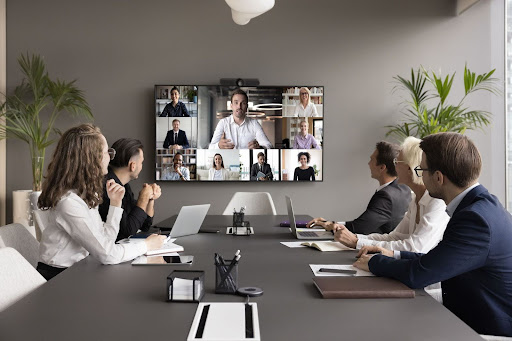
Hybrid working has changed the dynamics of teamwork and collaboration. Meetings are no longer limited to people sitting around a table; they now include remote employees, partners, and clients joining from different locations. To enable this, businesses are changing their meeting spaces and investing in a conference system for meeting room setups capable of accommodating both in-person and virtual participation seamlessly.
From Basic Meeting Rooms to Collaborative Spaces
The conventional meeting room was simply intended for in-person discussions. The modern business, however, requires meeting rooms that allow for the same levels of interaction, regardless of whether the participant is in the room or working from home. Thus, the design of the meeting room, acoustics, and technology have become major considerations to avoid the challenges of poor audio or video, or screen sharing, that occur in hybrid meetings.
Organizations today are now designing their meeting rooms as part of an end-to-end collaborative environment rather than treating the inclusion of devices as an afterthought.
Smarter Audio and Video for Clear Communication
A major challenge with a hybrid meeting is ensuring everyone can hear and be heard clearly. Businesses are adapting to smarter audio and video technology, which adjusts to room size and room motion. Solutions such as speaker tracking, noise canceling, and wide-angle cameras allow people on a distant connection to feel more involved in a meeting.
Such enhancements will be particularly important in the boardroom and other large conference rooms where a discrepancy in audio or fixed cameras can readily prevent teleworkers from actively participating.
Standardization Across the Meeting Rooms
Enterprises tend to have several offices or floors that include a number of meeting rooms. Different environments can result in confusion and time wastage. This can be resolved through the establishment of a standardized conference system for meeting rooms so that workers enter a space knowing what to expect.
Standardization most often involves:
- Unified control panels for video, audio, and display
- Consistent camera and microphone placement
- Common collaboration platforms across rooms
It lessens the amount of training needed and makes starting and managing meetings easy.
Security, Reliability, and IT Control
Hybrid work also raises security and reliability to a higher level of importance. Enterprises are prioritizing systems that integrate well with existing IT infrastructure and adhere to enterprise-grade security standards. They allow IT teams to centrally monitor, manage updates, and troubleshoot, so issues can be fixed and uptime can be guaranteed without necessarily going physically to every room.
Reliable systems also mean fewer disruptions during high-stakes meetings, which is imperative for leadership reviews, client calls, and cross-border collaborations.
Designing for Flexibility and Future Growth
Meeting rooms are no longer standardized. Organizations are also building spaces that can cater to a range of meeting formats, from a brief team huddle to a large-scale hybrid town hall meeting. Modular space design and cloud-based tools are making future-proof investments by enterprises a reality as work models are constantly changing.
This flexibility ensures that meeting spaces remain relevant even as collaboration tools and employee expectations change.
A Perspective on the Road Ahead
From Konverge’s perspective, enterprises upgrading their meeting spaces are not just adding technology; they are building foundations for long-term hybrid collaboration. A comprehensive conference system for meeting room environments can go a long way in helping teams communicate without misunderstanding, keep their attention, and get more work done efficiently, even if they are in different locations. With the growth of hybrid work, companies that emphasize user experience, reliability, and scalability will be the ones to benefit the most when it comes to supporting modern collaboration. In this context, topics such as video conferencing solutions, hybrid meeting rooms, smart conference room technology, and enterprise collaboration tools are gradually becoming the core of the way businesses view their workplaces.
Recent Posts

How to Choose the Right Data Center Solution for Your Business
March 8, 2026
No Comments
Read More »